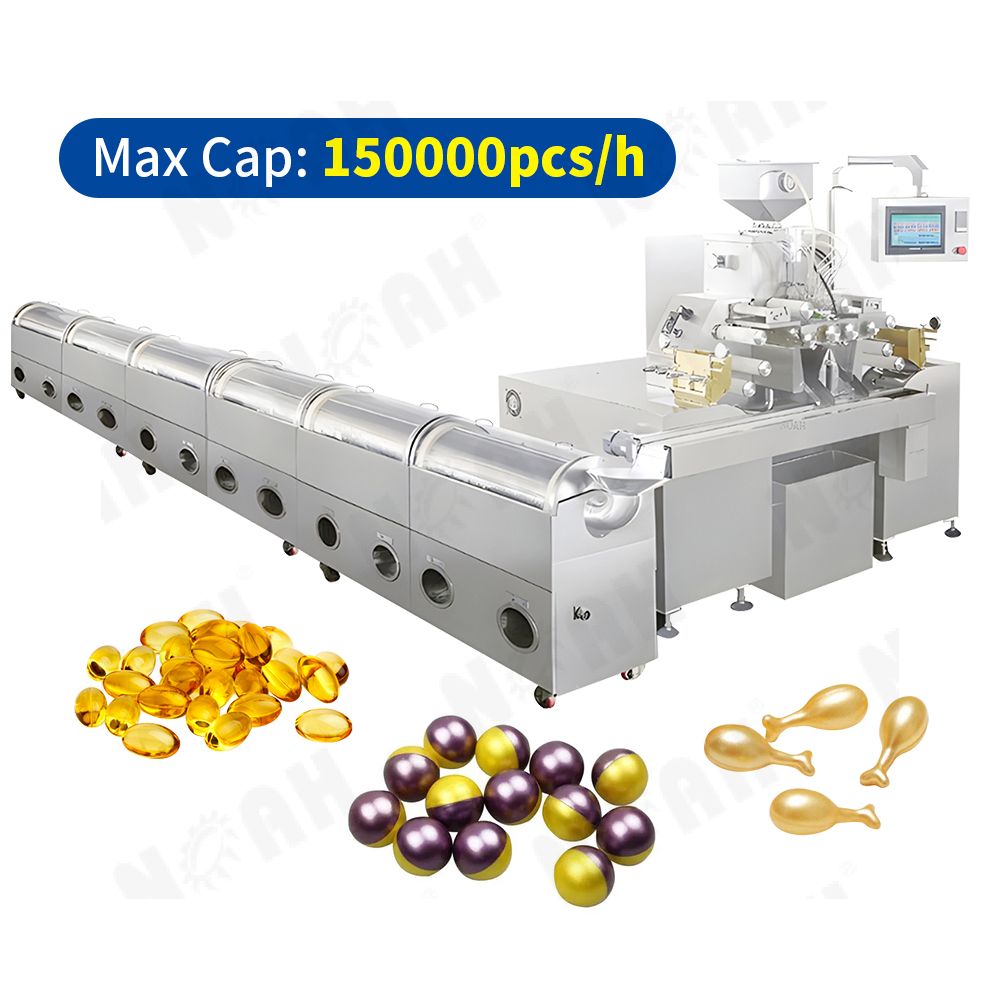
Pharmaceutical Equipments


Driven by the March 2026 Google Core Update and Spam Update, B2B industrial content now strictly prioritizes first-hand industrial experience, verifiable technical data and practical problem-solving value. This article abandons generic product introductions, focusing on real industry pain points, common selection errors, technical differentiation and compliant landing standards of pharmaceutical equipments, serving global pharmaceutical factory renovation, new plant construction and production line upgrade projects.
Based on 9-year cross-border pharmaceutical equipment project tracking and post-commissioning data statistics of 78 SADC and Southeast Asian pharmaceutical production lines in 2025–2026, the industry has three typical operational characteristics:
First, unmatched equipment configuration causes 62% of small and medium factory production losses. Many manufacturers blindly pursue high-speed industrial equipment while their batch volume, workshop cleanliness grade and manual matching capacity fail to support full-load operation, resulting in 15%–28% idle loss and frequent parameter deviation.
Second, regional compliance thresholds are rapidly upgraded. Starting from 2026, most African and Southeast Asian pharmaceutical supervision bureaus require fullIQ/OQ/PQ validation documents for production equipment, while 45% of low-cost generic equipments on the market cannot provide complete validation files, directly leading to product customs clearance rejection and factory audit failure.
Third, refined production becomes mainstream. The qualified rate of finished products from standardized matched production lines reaches 99.2% and above, while that of randomly configured mixed equipment lines is only 93.7% on average, with prominent tablet weight deviation, capsule filling error and blister sealing leakage problems.
Complete pharmaceutical solid dosage production equipments cover pretreatment, forming, post-processing and packaging four core links. The core technical gap between mainstream equipments lies in precision control, dust isolation and GMP adaptability, not superficial automation degree.
Including powder mixers, high-shear granulators and lab/pilot fluid bed dryers. The key technical indicator is moisture uniformity after treatment. Qualified industrial-grade fluid bed dryers control final granule moisture error within ±0.3%, while ordinary civilian dryers have an error exceeding ±1.2%, which directly causes tablet cracking and capsule content agglomeration in subsequent processes. Professional pharmaceutical pretreatment equipments adopt 316L stainless steel contact parts and closed negative pressure dust removal structure, complying with ISO 14644-1 cleanroom standard to avoid cross-contamination of raw materials.
Covering rotary tablet press machines, automatic hard capsule fillers and softgel encapsulation machines. The biggest industry misunderstanding is equating high speed with high precision. In actual industrial operation, high-speed tablet presses without pre-compression function will produce 8%–12% loose tablets when processing herbal powder with low fluidity; automatic capsule fillers lacking vacuum separation calibration will have repeated filling weight deviation exceeding ±3mg, failing pharmaceutical dosage precision standards.
For oil and liquid formula production, professional oil capsule filling machines support adjustable peristaltic/piston dosing according to material viscosity, solving the leakage and bubble problems that are common in ordinary modified filling equipments.
Including tablet coating machines, blister pack machines, strip packing machines and automatic cartoning machines. The core difference lies in sealing stability and material compatibility. GMP-grade blister and strip packing equipments support dual adaptation of PVC/PVDC aluminum foil and double-aluminum sealing materials, with constant temperature pressure control system ensuring zero leakage rate of sealed edges, meeting the 24-month shelf-life stability requirement of pharmaceutical products. Ordinary packaging equipments are prone to uneven hot pressing, resulting in moisture ingress and product deterioration in high-temperature and humid workshops.
All pharmaceutical equipments used for commercial drug and health product sales must meet three mandatory certification and specification systems, which are also the core inspection items of overseas factory audits:
First, CE full-module certification. It covers mechanical safety, electrical isolation and dust explosion-proof design, mandatory for EU, Southeast Asian and African market access.
Second, GMP cGMP structural specification. Product contact parts must use 316L medical-grade stainless steel (304 stainless steel is only applicable to laboratory trial production), with no dead-angle design, tool-free disassembly and independent dust extraction system to avoid residual material cross-contamination.
Third, complete validation document system. Including equipment installation qualification, operation qualification and performance qualification reports, which are essential documents for local pharmaceutical supervision audits in various countries in 2026.
Project Background: A medium-sized nutraceutical manufacturer in South Africa upgraded its oral solid production line, previously using mixed low-standard equipments, with long-term problems of low finished product qualified rate and failure to pass local GMP annual audit.
Problem Diagnosis: The original production line lacked matched fluid bed drying and pre-compression structure, with granule moisture unevenness and tablet hardness inconsistency; the packaging equipment had no constant temperature calibration function, leading to 7% blister sealing defective rate, unable to meet local health product shelf-life standards.
Optimization Scheme: Adopt full set of GMP-compliant pharmaceutical equipments including pilot fluid bed dryer, pre-compression rotary tablet press, precision automatic capsule filler and constant-temperature blister packing machine, supporting full-process negative pressure dust removal and parameter data logging.
Verified Effect: After 3 months of stable operation, the production line finished product qualified rate increased from 92.1% to 99.4%; the equipment failure downtime was reduced by 83%; the enterprise successfully passed the 2026 local pharmaceutical GMP re-audit and obtained SADC regional product sales qualification.
Combining years of overseas project debugging experience, the following four most common selection errors directly affect production compliance and profitability, worthy of key attention by procurement engineers and factory owners:
Pitfall 1: Blindly pursuing high-speed industrial equipments. Many small-batch manufacturers purchase high-speed continuous production machines, but long-term low-load operation leads to unstable equipment parameters, accelerated mechanical wear and increased material waste. Avoidance method: Match equipment grade according to daily batch volume; lab/pilot models for 0.5–5kg small batches, medium-speed commercial models for 100–500kg batches, and high-speed industrial models only for continuous mass production above 1000kg.
Pitfall 2: Ignoring material adaptability. Ordinary standard equipments cannot adapt to high-viscosity oil, fluffy herbal powder and heat-sensitive probiotic materials, prone to filling deviation, material agglomeration and active ingredient loss. Avoidance method: Confirm material fluidity, viscosity and heat resistance before selection, and customize feeding and pressing structure for special formulations.
Pitfall 3: Focusing on price rather than validation documents. Low-cost equipments lack complete GMP validation files, which cannot pass official audits even if the machine runs normally. Avoidance method: Prioritize suppliers with complete IQ/OQ/PQ document support for commercial production lines.
Pitfall 4: Disregarding regional power and environmental adaptation. Most African and Southeast Asian factories have unstable 3-phase power and high ambient humidity. Standard equipments without voltage stabilization and moisture-proof transformation are prone to frequent failures. Avoidance method: Equip customized voltage stabilization system and closed moisture-proof structure for non-standard workshop environments.
Q1: What is the biggest difference between laboratory and industrial pharmaceutical equipments in compliance?
A: Laboratory equipments focus on trial production parameter verification, allowing partial 304 stainless steel structures without complete validation documents; industrial commercial equipments must use 316L stainless steel for contact parts and provide full-set GMP validation files, which is a rigid threshold for market sales qualification.
Q2: Can one set of pharmaceutical equipment adapt to powder, granule and oil formula production at the same time?
A: Partial integrated equipments support switching of powder and granule production, but oil liquid formulas require professional oil-specific filling systems. Mixed use will cause residual cross-contamination and filling precision failure, which does not meet GMP production specifications.
Q3: How to judge whether the equipment meets 2026 latest pharmaceutical export standards?
A: Verify three core indicators: CE full certification mark, GMP-compliant structural design, and complete auditable validation documents. Simple appearance imitation equipments cannot pass the updated 2026 regional pharmaceutical supervision audits.
Q4: Is it necessary to replace old equipments for 2026 production line upgrade?
A: Not all old equipments need replacement. Equipments with qualified material structure and stable performance can be upgraded with parameter calibration and dust-proof transformation; only equipments lacking compliance certification and unable to meet precision indicators need overall replacement.
Q5: What is the key factor affecting the long-term stable operation of pharmaceutical equipments?
A: Not the equipment brand, but matching degree with production batch, material characteristics and workshop environment. Reasonable model selection and daily standardized maintenance can reduce equipment failure rate by more than 80%.
Written by David Shi | Chief Industrial Application Engineer
David Shi is a Chief Industrial Application Engineer with 9 years of specialized experience in industrial drying system design, equipment selection, and production process optimization. He focuses on delivering tailored solutions for pharmaceutical, food, and chemical manufacturing, with proven expertise in GMP compliance, ISO 9001 standards, and large-scale production line integration.
Contact Us
Related Information!
Tablet Press Machine UKMedicine Making MachineTablet MachineAutomatic Tablet Press MachineTablet Press Machine for Sale South AfricaCapsule FillerCapsule Maker AustraliaPress Machine for DrugsPowder to Tablet Making MachineBlister Pack MachineTablet Counting Machine South AfricaFluidized Bed DryerAutomatic Capsule Filling Machine PriceTablet Press AustraliaCapsule Making Machine UKPharmaceutical EquipmentsCapsule Pill MakerBlister Packaging MachineBuy Capsule Filling MachinePharmaceutical Machinery ManufacturersCapsule Filling Machine for SaleCapsule making machineSoftgel Capsule MachinePharmaceutical EquipmentTablet Compression Machine PriceMedicine Packing MachineEncapsulation MachinesEffervescent Tablet PressCapsule Refill MachineCandy Tablet PressSoft Gel Encapsulation MachineCapsule Packing MmachineTablet Machine PricePill Machine MakerBlister Packing Machine PriceTablet Press for SaleCapsule Filling Machine South AfricaCandy Press MachineSingle punch tablet machineSingle Punch Tablet Press MachineCapsules Filling MachineMedicine Capsule Filling MachineCapsule Filler South AfricaEasy Snap Packaging MachineMachine to Fill Capsules