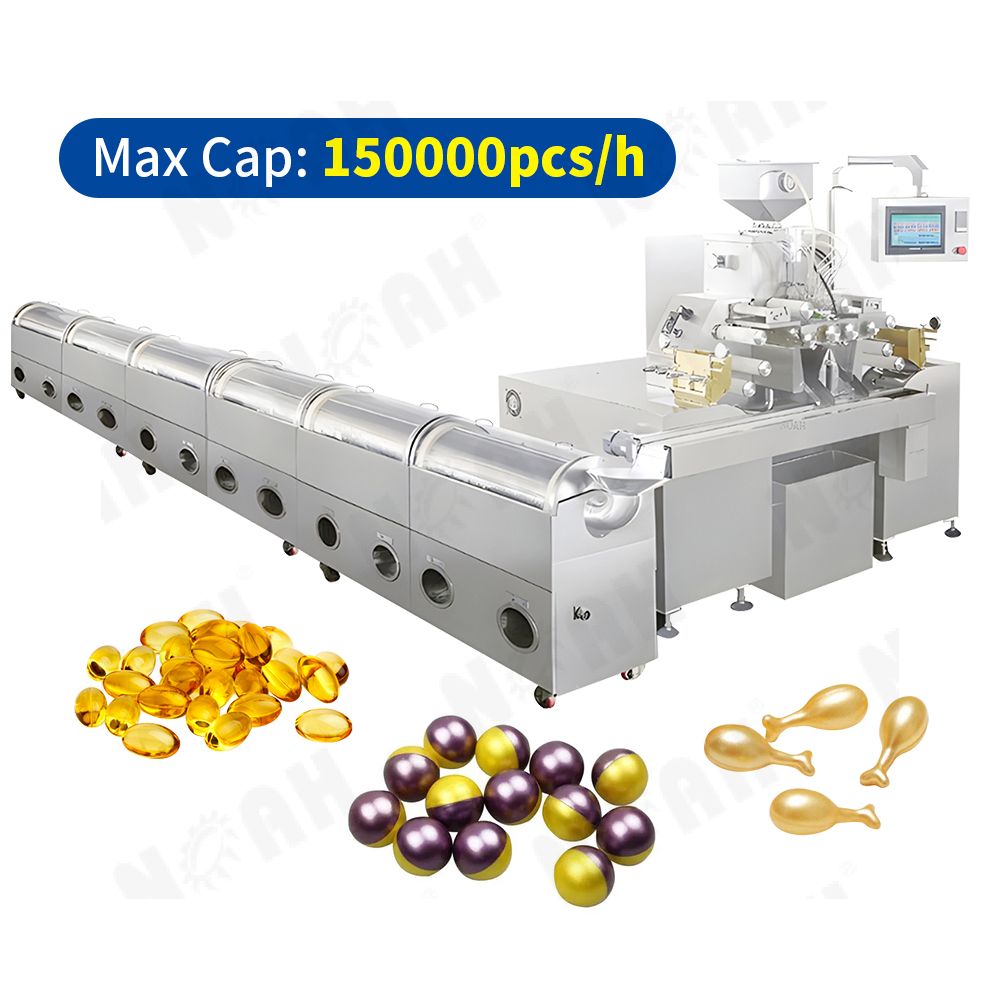
Medicine Capsule Filling Machine


When the dose is under one milligram, the capsule filling machine stops being a productivity tool and becomes a precision-and-containment instrument. A medicine capsule filling machine handling a potent API at 0.5 mg per dose faces two simultaneous engineering demands that an ordinary filler cannot meet: the dosing mechanism must deliver content uniformity that passes USP <905> and Ph. Eur. 2.9.40 at sub-milligram weights, and the machine must contain the API within an enclosure that keeps operator exposure below an OEB 5 limit. I have spent the better part of a decade working on exactly this intersection — the point where dosing precision and containment architecture collide — and the recurring failure is the same: buyers specify the filler, then bolt on containment as an afterthought, and discover at qualification that the containment and the dosing mechanism are architecturally incompatible.
Content uniformity — the requirement that each capsule contains a statistically tight band of API around the label claim — is a formulation challenge first, but it becomes a machine challenge when the dose is small. At 0.5 mg of API in a 150 mg capsule fill, the API is diluted 300:1 in excipient. The dosing mechanism must pull a representative sample from that blend on every cycle, and any powder segregation in the hopper, any dead zone in the dosing cavity, or any inconsistency in plug density propagates directly into content uniformity failure. The machine is not just filling a capsule; it is sampling a blend, and the sampling must be unbiased on every single stroke.
For tamping pin fillers handling low-dose blends, the dosing disc bore tolerance is the dominant variable. The bore is typically 3–6 mm in diameter for small capsule sizes, and a variation of 0.02 mm in bore diameter changes the plug volume — and thus the fill weight — by roughly 1.5%. At a 150 mg target fill, that is 2.25 mg, which may be acceptable; at a 0.5 mg API dose with a 0.15 mg acceptance band, it is a content uniformity failure waiting to happen. Precision-bored dosing discs with tolerances of ±0.005 mm are not a luxury for low-dose filling; they are the entry ticket.
The powder bed above the dosing disc must be maintained at a consistent height and density. If the bed height drops, the tamping pins draw less powder; if the powder de-aerates and densifies over time in the hopper, the plugs become heavier. A medicine capsule filling machine for low-dose blends must have an agitated, level-controlled hopper that maintains bed height within a tight band. Feed mechanisms that rely on gravity alone — without agitation or level control — produce weight drift that compounds over a batch and fails content uniformity at the start and end of the run.
The table below is drawn from content-uniformity and fill-weight studies on production-scale machines running formulations from high-dose to sub-milligram. The data illustrates how dosing precision and the machine's containment grade interact across the dose spectrum.
| Formulation Profile | Capsule Size | Target Fill Weight | API Dose | Fill Weight RSD | Content Uniformity (CU) Acceptance | Containment Grade |
| High-dose, granulated | Size 0 | 500 mg | 250 mg | 1.20% | Pass (AV < 2.0) | OEB 1–2 (open) |
| Mid-dose, direct blend | Size 1 | 200 mg | 25 mg | 1.80% | Pass (AV < 4.0) | OEB 3 (contained) |
| Low-dose, potent API | Size 3 | 150 mg | 1.0 mg | 2.40% | Pass (AV < 8.0, tight) | OEB 4 (split-valve, LEV) |
| Sub-mg potent API | Size 4 | 120 mg | 0.5 mg | 3.10% | Marginal (AV > 10 risk) | OEB 5 (isolator) |
The critical reading is in the last two rows. As the API dose drops below 1 mg, fill-weight RSD alone is no longer sufficient — content uniformity is governed by the blend's homogeneity and the machine's sampling consistency, and the acceptance value (AV) approaches the USP <905> limit. At 0.5 mg dose, the machine must not only dose precisely but also prevent any powder segregation in the hopper, maintain plug density consistency, and contain the API at OEB 5. A filler selected for throughput at this dose is the wrong filler; the selection criteria are precision, bed management, and containment architecture.
For non-potent, low-hazard APIs, an open medicine capsule filling machine with local exhaust ventilation (LEV) is acceptable. The operator can access the filling station for setup and cleaning, and the containment requirement is minimal. This architecture suits high-dose, non-potent products like vitamins and common analgesics. It is the wrong architecture for anything with an OEL below 100 µg/m³.
For APIs with OELs in the 1–100 µg/m³ range, the filler must be enclosed and the API charged through a split-butterfly valve or a continuous liner system. The filling station is under negative pressure, and the capsules discharge through an airlock. Cleaning is performed by CIP or by wipe-down through glove ports. This is the architecture for most prescription pharmaceutical capsule filling in EU and FDA-regulated plants today.
For highly potent APIs (OEL below 1 µg/m³ — oncology drugs, hormones, certain peptides), the filler is installed inside a glove-box isolator with a sealed, HEPA-filtered atmosphere. The operator never touches the machine directly; all manipulation is through gloves. The API is charged through a rapid transfer port (RTP), and waste is bagged out through a continuous liner system. The isolator is not an accessory bolted onto the filler — the filler and the isolator are co-engineered, because the isolator's gloves, transfer ports, and decontamination cycle (VHP or chlorine dioxide) must be compatible with the filler's geometry, material path, and cleanability.
EU GMP Annex 1 (sterile products) applies when the capsule is a sterile dosage form; Annex 2 (biological active substances) applies to biologic-derived APIs. For non-sterile oral solid dosage, the applicable framework is EU GMP Part I Chapter 3 (premises) and Chapter 5 (production), which require dedicated or effectively cleaned equipment, validated cross-contamination control, and documented containment performance. The EU's toxicological evaluation-based approach (EMA's "shared facilities" guideline) requires the manufacturer to calculate an acceptable daily exposure (PDE) and demonstrate that the cleaning and containment regimen holds residue below that limit. The capsule filler's cleanability and containment are central to that demonstration.
FDA's cGMP (21 CFR 210/211) requires equipment that is cleanable, calibrated, and qualified. For a medicine capsule filling machine, the control system must meet 21 CFR Part 11 for electronic records — audit trail, electronic signatures, role-based access. FDA's process validation guidance (2011) expects process design, qualification, and continued process verification, which means the filler's weight data, rejection data, and force/torque data must be trended across the product lifecycle. A filler that cannot export this data in a structured format cannot support continued process verification.
ISO 9001 underpins the manufacturer's fabrication and documentation consistency. ISO 13485 (quality management for medical devices) is relevant when the capsule product is classified as a medical device rather than a drug — this occurs with certain combination products and in some regulatory jurisdictions. A filler manufacturer with ISO 13485 certification demonstrates a QMS that extends beyond manufacturing into design controls and risk management, which aligns well with the ICH Q9 (Quality Risk Management) expectations applied to GMP capsule filling.
Cross-contamination between campaigns. A medicine capsule filler running multiple products must be cleaned to a validated residue limit between campaigns. The filler's design determines whether cleaning is achievable: hidden dead legs, non-drainable piping, and crevice-prone change parts make validated cleaning impossible regardless of the cleaning protocol. A filler designed for cleanability — fully drainable, no dead legs, electropolished surfaces, CIP-capable — reduces cleaning validation burden by orders of magnitude compared with a filler that must be disassembled and manually wiped.
Low-dose content uniformity drift. Content uniformity at sub-milligram doses drifts when the powder bed densifies in the hopper over a long batch. The first capsules and the last capsules may both pass fill-weight RSD but fail content uniformity because the blend has segregated. The fix is an agitated, level-controlled hopper that maintains bed density, and a machine that trends fill weight across the batch so drift is visible in real time.
Isolator-filler interface complexity. When a filler is installed inside an isolator, every maintenance task — clearing a jam, adjusting a change part, replacing a seal — must be performed through glove ports. A filler not designed for isolator integration may have adjustment points that are unreachable through gloves, making routine operation impossible without breaking isolator integrity. This is not a minor inconvenience; it is a production-stopping design flaw.
"Any filler can be put in an isolator." This is the most dangerous and most common misconception. A filler that was not co-designed for isolator integration will have maintenance access points, adjustment screws, and change-part fixings that cannot be reached through gloves. Retrofitting an isolator around a conventional filler typically requires redesigning the filler's frame, which is rarely economically viable. If the API is OEB 5, buy a filler that was designed for isolator integration from the drawing board.
"Higher fill-weight RSD tolerance is acceptable for low-dose products." The opposite is true. As the API dose drops, the acceptable variance in API content drops proportionally, but the challenge of achieving it rises because the blend is more dilute. A machine with 2.5% fill-weight RSD that is acceptable for a 250 mg dose may produce content uniformity failures at a 0.5 mg dose because the sampling inconsistency dominates the measurement.
"Cleaning validation is the same regardless of machine design." It is not. A filler with hidden dead legs cannot be validated to a low PDE regardless of the cleaning method, because the residue in the dead leg is not contactable by the cleaning agent. Machine cleanability is a design feature, not a procedural one, and it should be specified in the URS as a design requirement with measurable acceptance criteria (e.g., "no dead legs exceeding 3 pipe diameters, all product-contact surfaces drainable, CIP-capable with demonstrated residue recovery").
| Criterion | Open Filler | Contained (Split-Valve) | Isolator-Integrated |
| OEB rating | 1–2 | 3–4 | 5 |
| API charging | Manual open charge | Split-butterfly valve | RTP / continuous liner |
| Operator access | Direct | Glove ports / LEV | Glove ports only (isolator) |
| Cleaning | Manual / open CIP | Closed CIP / wipe-down | CIP in isolator + VHP decon |
| Cleanability design | Standard | Drainable, minimal dead legs | Co-engineered for glove access |
| Low-dose CU performance | Formulation-dependent | Good (agitated hopper) | Good (if hopper designed for it) |
| Best fit | Non-potent, high-dose | Standard pharma, OEB 3–4 | Potent oncology, hormone, OEB 5 |
Specify the containment grade against the API's OEL, not the product's volume. The containment requirement is driven by the most potent product that will ever run on the machine, not by the current product portfolio. If there is any possibility of running an OEB 5 product in the next five years, buy an isolator-integrated filler now. Retrofitting containment from OEB 3 to OEB 5 is almost always a replacement, not an upgrade.
Demand a containment performance test at FAT. The supplier should demonstrate containment performance using a surrogate (typically naproxen sodium or lactose with a fluorescing tracer) with air sampling at the operator breathing zone and at the discharge point. The result — in µg/m³ — should be compared to the target OEL. A containment claim without a measured performance test is a brochure assertion, not engineering evidence.
Verify isolator-glove accessibility for every maintenance task. At FAT, ask the operator to clear a simulated capsule jam, replace a dosing disc, and adjust a segment gap — all through isolator gloves. If any task cannot be completed through the gloves, the filler-isolator interface has a design defect that will cause production stoppages. This test reveals problems that no drawing review will catch.
Require the cleaning-validation design package up front. The supplier should provide a P&ID with all dead legs identified, a drainability map, a CIP coverage study, and material certificates for all product-contact surfaces. A filler without this package cannot be validated to a modern PDE-based cleaning standard, regardless of how well it fills.
An EU pharmaceutical company developing a 0.25 mg oncology capsule — an API with an OEL below 0.5 µg/m³ — was initially quoted a contained filler (OEB 4) with LEV and a split-valve charge, on the rationale that the dose was small and the batch volume was low. The containment assessment, however, showed that the LEV-based enclosure could not reliably hold the OEL during capsule discharge and cleaning, where powder disturbance is highest.
The project pivoted to an isolator-integrated intermittent-motion filler co-engineered with the isolator supplier. The filler's dosing disc was precision-bored to ±0.005 mm, the powder hopper was agitated and level-controlled, and the API was charged through a rapid transfer port. The isolator was decontaminated by VHP between campaigns. After three PQ batches, fill-weight RSD held at 2.8%, content uniformity passed with an acceptance value of 7.2 (against a limit of 15), and operator exposure measured at the breathing zone was below the detectable limit of the air-sampling method.
The decision was driven by the API's OEL, not by the batch volume. A contained filler would have filled the capsules; it would not have protected the operators or passed the containment qualification. The isolator was the right answer not because it was more advanced but because the API demanded it.
Obtain the OEL (occupational exposure limit) or OEB (occupational exposure band) of every API that will run on the machine, including future pipeline products. OEB 1–2 (OEL > 10 mg/m³) suits open filling; OEB 3–4 (OEL 10 µg/m³ to 10 mg/m³) requires contained filling with split-valve transfer; OEB 5 (OEL < 10 µg/m³, often below 1 µg/m³) requires isolator integration. The containment grade is set by the most potent product, not the average product. When in doubt, consult an industrial hygienist before specifying the machine.
Fill-weight uniformity (measured as RSD) tells you the machine dispenses a consistent total weight. Content uniformity tells you each capsule contains a consistent amount of API. At high doses, the two correlate closely. At low doses (below ~5 mg API), they diverge: a machine can fill 150 mg ± 2% consistently but deliver 0.5 mg API ± 25% if the blend has segregated in the hopper. Content uniformity is the GMP-relevant test for low-dose products, and it is governed by the machine's powder-bed management, not just its dosing precision.
For OEB 3 (OEL ~100 µg/m³ to 10 mg/m³), a contained filler with split-valve charging and LEV at the discharge point can operate in a standard GMP production room, provided the containment performance test demonstrates operator exposure below the OEL. For OEB 4 and above, room design (air pressure cascade, airlocks) becomes part of the containment strategy, and the filler alone is not sufficient. The room, the filler, and the transfer systems are a system, not independent components.
Beyond the standard DQ/IQ/OQ/PQ, material certificates, and Part 11 compliance: the isolator's HEPA integrity test, the VHP decontamination cycle validation (with biological indicators), the containment performance test (surrogate air sampling), the glove integrity test method and frequency, and the RTP certification. The filler-isolator integration should be covered by a joint design qualification, because the two are a single qualified system, not two independent pieces of equipment.
EMA's PDE (permitted daily exposure) guideline requires you to calculate, for each API, the maximum residue that can remain on equipment after cleaning without posing a patient-safety risk in the next product. The filler's cleanability — dead legs, drainability, surface finish — directly determines whether you can meet that PDE with a practical cleaning protocol. A filler with poor cleanability may force you to dedicate it to a single product (eliminating multi-product economics) or to accept cleaning cycles so long that OEE collapses. Cleanability is not a maintenance concern; it is a GMP compliance and economics concern.
Written by David Shi | Chief Industrial Application Engineer
David Shi is a Chief Industrial Application Engineer with 9 years of specialized experience in industrial drying system design, equipment selection, and production process optimization. He focuses on delivering tailored solutions for pharmaceutical, food, and chemical manufacturing, with proven expertise in GMP compliance, ISO 9001 standards, and large-scale production line integration.
Contact Us
Related Information!
Press Tablet MachineCapsule Machine PriceTablet Punching MachineCapsule Machine for SaleMachine A BlisterPharmaceutical EquipmentPress Machine for DrugsBlister Pack MakerGel Capsule Filling MachinePill capsule fillerBuy Capsule Filling MachinePharmaceutical Machinery ManufacturersPowder to Tablet Making MachineFluidized Bed DryingPill Capsule MachineDrug Press MachineMachine to Fill CapsulesCapsule Filling MachineEmpty Capsule Filling MachineTablet making machineTablet CompressionCapsule FillerFluidized Bed DryerMedicine Tablet Making MachineSnap Packing MachineBlister Packing Machine PriceAutomatic Capsule Filling MachineCapsule Filling Machine AustraliaPill Filler MachineBlister Pack for TabletsFilling Capsule MachineCapsule MachineCapsule Filling Machine AutomaticPills Making Machine PriceMedicine Manufacturing MachineSoftgel Encapsulation MachineCompression Tablet MachineTablet Press MachineEncapsulator MachinePharma Equipment ManufacturersMachine TabletTablet Blister Packing MachinePowder Tablet PressTablet Machine PriceGelatin Capsule Filling Machine