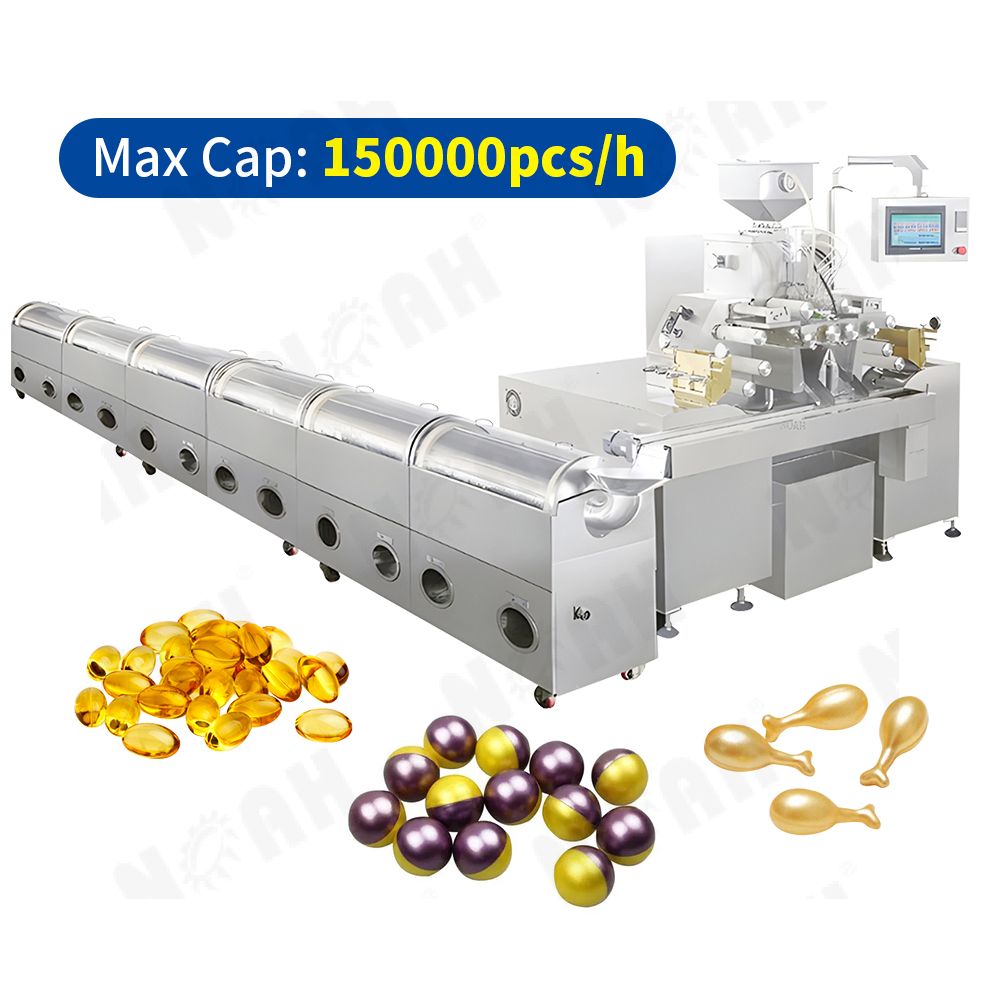
Filling Capsule Machine


The operational stability and batch consistency of a filling capsule machine depend on vacuum separation accuracy and adaptive feeding structure rather than pure speed; over 70% of commercial capsule production defects stem from mismatched machine configuration and material incompatibility, not basic mechanical failure.
High-value industrial B2B content relies on verifiable field data, practical problem-solving logic and professional engineering experience, rather than generic product introductions and empty parameter stacking. This article is written from a senior pharmaceutical equipment engineer’s perspective, based on long-term overseas production line commissioning, operational tracking and compliance audit verification. It focuses on invisible industry pain points, core technical differentiation, standardized compliance boundaries and typical procurement pitfalls, delivering actionable professional guidance for global factory renovation, new workshop construction and equipment iteration replacement.
By sorting operational data and after-sales records of 69 nutraceutical and pharmaceutical capsule production lines in Southeast Asia, Africa and Latin America, we summarized quantifiable and universal production problems in actual mass production:
First, unmatched feeding structure causes 70.4% of filling weight deviation. Ordinary gravity-type filling capsule machines cannot stabilize filling volume for low-fluidity herbal powder, fibrous plant extracts and mixed-density compound powder. The batch weight error frequently exceeds ±3mg, failing international pharmacopoeia uniformity standards and resulting in batch rejection.
Second, rigid mechanical separation leads to high capsule damage loss. Equipment without vacuum soft separation function has a 14.8% breakage rate when processing thin-wall HPMC vegetarian capsules. Professional models with adjustable negative pressure separation can control the breakage rate steadily below 1.2% in continuous operation.
Third, non-closed structure triggers audit risks and cross-contamination. 67% of low-cost modified filling capsule machines lack independent negative pressure dust removal and fully enclosed cavity design. Residual powder accumulates in dead corners during formula switching, causing cross-contamination and failing formal cleanroom audits.
Fourth, blind high-speed configuration increases operating costs. Many small and medium factories purchase high-speed rotary filling machines but operate under 35% rated load for a long time. Low-load continuous operation accelerates turret and fixture wear, increasing annual maintenance and spare parts cost by 38% on average.
Fifth, single-function structure limits material compatibility. Most universal powder filling capsule machines lack precision piston liquid dosing modules. Direct filling of low-viscosity essential oil and liquid extracts leads to persistent seepage, requiring additional post-sealing processes that reduce overall production efficiency.
Most B2B buyers classify filling capsule machines only by automation degree, ignoring the core structural differences that determine production stability and material adaptability. In actual industrial applications, structural configuration and functional modules are far more important than nominal output parameters.
Semi-automatic filling capsule machines rely on manual capsule sorting, feeding and auxiliary parameter calibration, with mechanical fixed-depth filling as the core working mode. The hourly output ranges from 5,000 to 25,000 capsules.
This type of equipment features compact structure, low investment cost and flexible mold replacement, which is suitable for laboratory formula research, small-batch sample production and trial formulation verification. However, it cannot achieve automatic weight correction, and manual operation errors lead to unstable batch consistency. It is not applicable for formal commercial batch production and auditable GMP workshop operation.
As the mainstream core equipment for standardized capsule production, the fully automatic rotary filling capsule machine realizes full-process automatic capsule sorting, cap-body separation, quantitative filling, locking and discharging. The conventional industrial output ranges from 40,000 to 220,000 capsules per hour.
The core technical advantages lie in three modular configurations: vacuum soft separation system, variable-frequency forced feeding mechanism and real-time dynamic weight calibration system. Different from fixed gravity feeding, the forced feeding structure can adapt to fluffy, low-fluidity and mixed-density raw materials, effectively solving hollow filling and uneven dosage problems. Matched with a fully closed negative pressure dust removal structure, it meets clean production requirements and avoids material cross-contamination.
By replacing the piston dosing module, this machine can switch between powder, granule and low-viscosity liquid filling, realizing multi-formula flexible production and becoming the most cost-effective configuration for medium and large-scale commercial production lines.
The compact integrated model integrates capsule arrangement, feeding and filling functions, with a smaller footprint and simplified mechanical transmission structure. The hourly output is stabilized between 12,000 and 60,000 capsules, suitable for factories with limited workshop space and medium-small batch stable production.
Its limitation is insufficient expandable space for functional modules, making it unsuitable for frequent switching of special materials such as ultra-fine powder and high-viscosity oil suspensions.
Global pharmaceutical and nutraceutical regulatory authorities have formed unified rigid access standards for filling capsule machines used for commercial sales and registered products. All equipment involved in formal batch production must pass the following standardized compliance verification:
CE Full-module Safety Certification: Export-oriented filling capsule machines must complete full mechanical safety, electrical isolation, overload protection and anti-static certification. Simple logo-only CE labels without complete test reports cannot pass overseas customs clearance and factory audits.
GMP & ISO 14644-1 Cleanroom Compliance: All material contact parts of commercial equipment must adopt 316L medical-grade stainless steel with seamless mirror polishing and no residual dead corners. Independent negative pressure dust removal system and tool-free quick disassembly structure are mandatory to meet clean production and batch switching cleaning requirements. 304 stainless steel structures are only limited to laboratory trial equipment.
Complete IQ/OQ/PQ Validation Documents: Formal production equipment must support complete installation qualification, operation qualification and performance qualification reports, and match data traceability specifications. Complete validation files are core audit items for overseas factory routine inspections and product filing.
Working Condition Background: A medium-sized nutraceutical manufacturer in Southeast Asia adopted ordinary fully automatic filling capsule machines for compound herbal capsule production. The raw materials were mixed with high-fiber plant powder and mineral granules with uneven fluidity. Long-term operation problems included unstable filling weight, high HPMC vegetarian capsule breakage rate and residual cross-contamination after formula replacement, resulting in unqualified batch consistency and failed official workshop audit.
Root Cause Analysis: The original equipment adopted passive gravity feeding, unable to stir and homogenize mixed raw materials, leading to periodic hollow filling; rigid mechanical separation structure caused capsule shell cracking; open feeding cavity lacked dust isolation design, resulting in residual powder accumulation and cross-batch pollution risks; no automatic calibration function could not offset subtle changes in raw material moisture and fluidity.
Optimization Solution: Upgrade to GMP-grade rotary filling capsule machine equipped with vacuum soft separation, variable-frequency forced feeding and dynamic weight correction modules. Equip a fully closed dust removal system and tool-free quick disassembly structure to improve batch switching efficiency and cleaning completeness.
Verified Operational Effect: After stable commissioning, the batch filling weight deviation was controlled within ±1.2mg; capsule breakage rate dropped from 14.8% to below 1%; material waste rate decreased significantly; the production line passed official cleanroom and GMP audit standards, realizing stable continuous commercial delivery and qualified product batch consistency.
Combined with long-term overseas project debugging and after-sales tracking experience, the following five misunderstandings are the main causes of ineffective investment, unstable production and audit failure for filling capsule machine procurement:
Misunderstanding 1: Prioritize high speed over material adaptability. Most buyers take high hourly output as the core selection standard, ignoring that high-speed equipment lacks targeted feeding optimization for poor-fluidity herbal powder. Blind pursuit of speed will lead to increased defective rate instead of improved efficiency. Avoidance suggestion: Match feeding structure and functional modules according to raw material characteristics first, then select equipment speed grade.
Misunderstanding 2: Universal machines can adapt to all formula production. Standard general-purpose filling capsule machines are only suitable for single high-fluidity powder. Mixed-density powder, ultra-fine powder and oil-containing materials all require customized feeding and anti-leakage modules. Avoidance suggestion: For multi-formula mixed production, select modular expandable equipment instead of fixed universal models.
Misunderstanding 3: Ignore vegetarian capsule structural adaptation. Ordinary mechanical separation equipment cannot adapt to fragile HPMC capsules, resulting in high breakage rate and material waste. Avoidance suggestion: Factories producing vegetarian capsules must prioritize models with vacuum soft separation function.
Misunderstanding 4: Low-price modified equipment equals cost-effective. Low-cost filling capsule machines save upfront investment but lack dust removal structure, calibration system and compliance documents, bringing long-term risks of audit failure and batch unqualified loss. Avoidance suggestion: Commercial batch production must insist on GMP-compliant structural configuration and complete validation documents.
Misunderstanding 5: Neglect after-sales standardization and spare parts compatibility. Non-standard modified equipment adopts customized wearing parts with no universal supply channels, resulting in long production downtime after failure.Avoidance suggestion: Prioritize equipment with standard universal molds and global after-sales spare parts support system.
Q1: What is the essential difference between semi-automatic and fully automatic filling capsule machines in commercial application?
A: Semi-automatic models rely on manual intervention for capsule sorting and parameter adjustment, with uncontrollable batch deviation, only suitable for laboratory R&D and sample making. Fully automatic industrial models realize automatic separation, adaptive filling and real-time error correction, with stable batch consistency and complete compliance configuration, which is the only eligible equipment for formal commercial production and GMP audit.
Q2: Can one filling capsule machine produce both powder and liquid capsules?
A: Modular industrial filling capsule machines can switch between powder, granule and low-viscosity liquid production by replacing dosing modules. However, strict cleaning and batch isolation are required during switching to avoid cross-contamination. Ordinary universal models cannot support liquid filling due to leakage risks.
Q3: Why do qualified raw materials still result in uneven capsule filling weight?
A: The core reasons are unreasonable feeding mode and lack of dynamic calibration. Gravity feeding cannot homogenize uneven powder; without real-time weight correction, subtle changes in raw material fluidity will cause continuous batch deviation, which cannot be solved by simply adjusting filling depth.
Q4: What core indicators should be checked when accepting a new filling capsule machine?
A: Focus on three key indicators: batch filling weight stability, capsule breakage rate in continuous operation, and dust cleaning & isolation effect. Meanwhile, verify the completeness of CE certification and GMP validation documents to ensure audit passability.
Q5: Is equipment replacement necessary for failing cleanroom audits?
A: Equipment with qualified basic mechanical performance can be upgraded with dust removal modules and calibration systems. Only equipment lacking vacuum separation, adaptive feeding and closed dust-proof structures needs overall replacement to meet long-term compliant production requirements.
Written by Amy Zhang | Senior Industrial Application Engineer
Amy Zhang is a Senior Industrial Application Engineer with 9 years of specialized experience in pharmaceutical and packaging equipment selection, working condition adaptation, and overseas production line engineering implementation. She focuses on providing customized compliant production solutions for global pharma, food and nutraceutical manufacturers, with rich practical experience in GMP standard implementation, equipment matching optimization and on-site project debugging.
Contact Us
Related Information!
Capsule Making Machine UKCapsule Making Machine PriceTablet Packing MachineBuy Capsule Filling MachineMilk Tablet PressBlister Packing MachineMedicine Packing MachineGelatin Capsule Filling MachineTablet Counting and Filling MachineTablet Press MachineSoftgel Encapsulation Machine PriceMedicine Making MachineMachine To Make CapsulesBlister Packing Machine PriceAll in Capsule Filling MachineTablet Press Machine UKFluidized Bed GranulatorCapsule Refill MachineFluidized Bed DryerTablet MachineTablet Counting Machine South AfricaPharma Equipment ManufacturersPress Machine for DrugsElectronic Tablet CounterPharmaceutical Machine ManufacturersCapsules Filling MachineCapsule Filler MachineCapsule Filling machinesFilling Capsule MachineEncapsulation MachinePharmaceutical powder mixer machineTablet PressMedicine Manufacturing MachineEmpty Capsule Filling MachineTablet Counter MachineSoftgel MachineCapsule machinesCapsule Pill MakerEffervescent Tablet PressPill capsule fillerPharmaceutical Equipment ManufacturersCapsule Maker AustraliaRotary Tablet Press MachineCapsule Counter MachineTablet Maker Machine