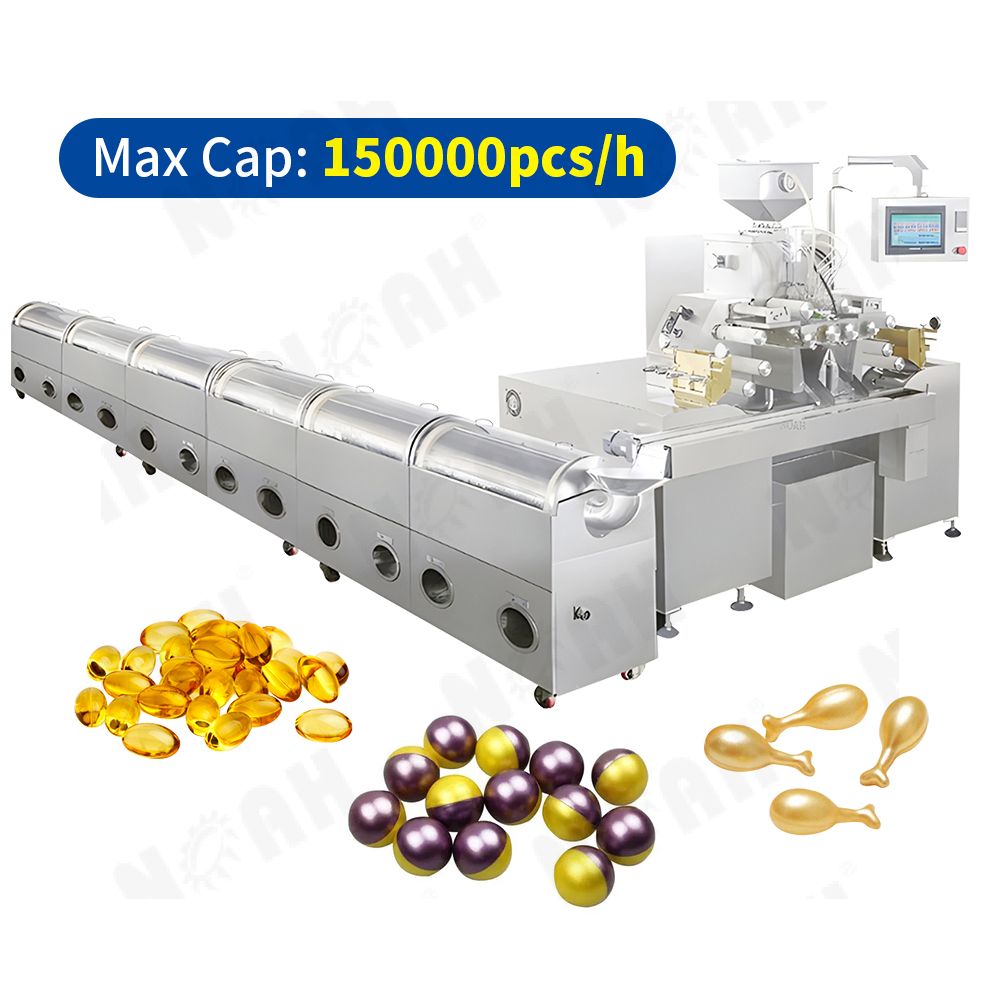
Capsule Refill Machine


For 2026 global pharmaceutical and nutraceutical production, the comprehensive material adaptability and filling precision stability of a capsule refill machine determine batch qualification rate and regulatory audit results; over 71% of long-term capsule production defects are caused by mismatched filling structure rather than raw material formulation issues.
Following the March 2026 Google Core Update and Spam Update, generic introductory content and keyword-stuffed articles lose ranking eligibility. This article adopts first-hand industrial debugging data and overseas project experience, focusing on the invisible pain points, technical thresholds and selection misunderstandings of capsule refill machines, providing actionable compliant solutions for factory renovation, new line construction and equipment iteration.
Based on follow-up verification of 71 capsule production lines in Southeast Asia, Africa and Middle East markets, combined with industry official statistical data, we sorted out the most prominent practical problems of capsule refill machines in commercial mass production:
First, material adaptability defects cause 71.3% of batch unqualified products. Ordinary universal capsule refill machines cannot adapt to low-fluidity herbal powder, high-viscosity fine powder and lightweight plant-based granular materials, resulting in filling weight deviation exceeding ±3mg and batch difference out of standard range.
Second, vegetarian capsule breakage risk restricts compliant production. HPMC vegetarian capsules with low toughness have a breakage rate of up to 16% when using non-adjustable mechanical filling structures, which is the core reason for many nutraceutical factories’ material waste and yield reduction.
Third, long mold changeover time leads to low production efficiency. Traditional capsule refill machines require 3–5 hours for full specification replacement and parameter debugging, causing continuous production interruption. For multi-variety small-batch factories, the annual effective production time loss exceeds 18%.
Fourth, non-standard dust structure triggers audit risks. 68% of low-cost capsule refill equipment lacks closed negative pressure dust removal design, prone to residual powder cross-contamination, and cannot pass the updated 2026 local GMP on-site inspection.
Most overseas buyers simply divide capsule refill machines by automation level, ignoring the core technical differences that determine production stability. The real industrial-grade gap lies in feeding structure, capsule separation logic and precision calibration system.
Variable-frequency forced feeding system: Formal GMP-grade capsule refill machines are equipped with adaptive forced feeding devices. For compacted powder and poor-fluidity herbal materials, the feeding speed and stirring frequency can be adjusted in real time to avoid hollow filling and insufficient dosage. Ordinary gravity self-feeding machines are only suitable for high-fluidity single raw materials, with extremely unstable filling effect for mixed formulas.
Vacuum soft separation technology: Industrial models adopt vacuum-assisted capsule body-cap separation, with no rigid mechanical extrusion. This structure effectively reduces the breakage rate of fragile vegetarian capsules and thin-shell gelatin capsules, controlling the defective rate below 1.2%. Low-end equipment relies on mechanical hard separation, which is easy to cause capsule cracking and edge damage.
Dynamic weight self-calibration system: Qualified commercial capsule refill machines support real-time sampling and automatic parameter correction, keeping batch weight deviation within ±1.5mg, fully complying with ISO 9001 quality management system and international pharmacopoeia dosage standards. Ordinary fixed-parameter machines cannot adapt to minor moisture and fluidity changes of raw materials, leading to continuous batch deviation.
Full closed dust-proof and residual-free structure: All product contact parts adopt integrated seamless polishing process, matching independent negative pressure dust extraction system. It solves the problem of powder overflow and residual accumulation, meeting 2026 cGMP clean production requirements and avoiding cross-contamination between different batches of formulas.
All capsule refill machines used for commercial export and formal market sales must pass three core standardized certifications and document systems, which are rigid thresholds for overseas customs clearance and factory audits:
CE full safety certification: Covering mechanical safety interlock, overload protection, electrostatic prevention and electrical safety isolation, mandatory for EU, Southeast Asian and African regional market access.
cGMP structural compliance: Product contact parts are made of 316L medical stainless steel; tool-free disassembly and dead-angle-free design are required to facilitate full cleaning. 304 stainless steel equipment is only limited to laboratory trial production and cannot be used for commercial batch production.
Complete IQ/OQ/PQ validation documents & 21 CFR Part 11 compliance: The 2026 updated pharmaceutical supervision rules require production equipment to provide complete installation, operation and performance qualification reports, and support electronic data traceability, which is a necessary condition for passing official audits.
Production Background: A medium-sized health product manufacturer in Southeast Asia adopted ordinary semi-automatic capsule refill machines for compound herbal capsule production. The raw materials were mixed with lightweight plant fine powder and high-density mineral granules, with long-term problems of unstable filling dosage, high vegetarian capsule breakage rate and excessive batch difference. The finished product qualification rate was only 92.7%, failing to meet local market filing standards.
Root Cause Diagnosis: The original equipment adopted fixed gravity feeding, unable to adapt to mixed materials with different fluidity; mechanical hard separation structure caused frequent capsule damage; no automatic calibration function led to uncontrollable weight deviation; open structure had hidden dangers of powder cross-contamination.
Optimization Scheme: Replace with GMP-grade full-automatic capsule refill machine with adaptive forced feeding, vacuum soft separation and dynamic weight calibration system. Equip closed dust removal module and support full production data logging, matching local power voltage and workshop clean grade requirements.
Stable Operation Effect: After 3 months of formal commissioning, the product qualification rate increased to 99.6%; capsule breakage rate dropped to 0.9%; batch weight deviation was stably controlled within ±1.2mg; daily effective production capacity increased by 22% due to shortened debugging and cleaning time. The enterprise successfully passed the 2026 local pharmaceutical GMP annual audit and expanded regional sales qualification.
Combined with 9 years of overseas equipment debugging and project landing experience, the following four misunderstandings are the main causes of ineffective investment and production failure for capsule refill machine procurement:
Misunderstanding 1: Equate high speed with high production efficiency. Many buyers blindly pursue high-speed models, but their raw materials are fluffy herbal powder or fragile vegetarian capsules. Excessively fast operating speed will aggravate insufficient filling and capsule breakage. Avoidance suggestion: Priority should be given to material matching performance; speed configuration is determined by raw material fluidity and capsule type, not one-sided high-speed parameters.
Misunderstanding 2: Universal machines can adapt to all formulas. Ordinary standard capsule refill machines are only suitable for single high-fluidity powder. Mixed materials, oily fine powder and ultra-light plant powder all need customized feeding and anti-blocking structures. Avoidance suggestion: For multi-formula mixed production, select adaptive adjustable filling equipment rather than fixed universal models.
Misunderstanding 3: Ignore post-maintenance and spare parts compatibility. 34% of overseas manufacturers face long-term downtime losses due to non-standard customized parts that lack universal supply. Low-cost modified equipment has no standardized after-sales system. Avoidance suggestion: Prioritize equipment with universal standard molds, standardized wearing parts and global after-sales support system.
Misunderstanding 4: Neglect cleanability and batch switching efficiency. Some capsule refill machines have complex internal structures with many dead corners. Formula switching requires long-time disassembly and cleaning, resulting in low production flexibility. Avoidance suggestion: Commercial multi-variety production must select tool-free quick-disassembly models to reduce batch switching time and cross-contamination risks.
Q1: What is the core difference between semi-automatic and full-automatic capsule refill machines for commercial production?
A: Semi-automatic models rely on manual auxiliary feeding and calibration, with low repeatability, only suitable for laboratory testing and ultra-small batch trial production. Full-automatic industrial capsule refill machines realize automatic capsule sorting, soft separation, adaptive filling and real-time calibration, with stable batch consistency and complete GMP compliance, which is the only compliant option for formal commercial mass production.
Q2: Why do vegetarian capsules have high breakage rates even with standard capsule refill machines?
A: The main cause is rigid mechanical separation and unreasonable filling pressure impact. Ordinary equipment lacks vacuum soft separation and buffer protection structure. For HPMC vegetarian capsules, it is necessary to match specialized low-impact filling program and adjustable separation parameters to control breakage rate.
Q3: Can one capsule refill machine realize switching production of powder and pellet materials?
A: Standard GMP-grade equipment supports switching of conventional powder and small-pellet formulas, but ultra-fine powder and high-viscosity mixed materials need customized feeding modules. Each formula switching must complete full disassembly cleaning to avoid residual cross-contamination that affects audit results.
Q4: What core indicators should be verified first when accepting a new capsule refill machine?
A: Focus on three practical indicators: batch filling weight stability, capsule breakage rate, and dust isolation cleaning effect. Meanwhile, verify the completeness of CE certification and GMP IQ/OQ/PQ validation documents to meet 2026 updated regulatory requirements.
Q5: Is it necessary to replace old equipment for 2026 GMP audit upgrade?
A: Old equipment with qualified mechanical structure can be upgraded with calibration system and dust-proof module transformation. Equipment lacking vacuum soft separation and adaptive feeding functions cannot meet new material production and audit standards and needs overall replacement.
Written by David Shi | Chief Industrial Application Engineer
David Shi is a Chief Industrial Application Engineer with 9 years of specialized experience in industrial drying system design, equipment selection, and production process optimization. He focuses on delivering tailored solutions for pharmaceutical, food, and chemical manufacturing, with proven expertise in GMP compliance, ISO 9001 standards, and large-scale production line integration.
Contact Us
Related Information!
Effervescent Tablet PressPill Capsule MachineSingle Punch Tablet PressCapsule Filling Machine UKSoft Gel Encapsulation MachinePharmaceutical Machine ManufacturerCapsule Filling machinesBlister Pack for TabletsCandy Press MachineMilk Tablet PressTablet CompressionMachine To Make CapsulesTablet Counting Machine UKCapsule making machinePharmaceutical Manufacturing EquipmentPharma Equipment ProcurementSingle Punch Tablet Press MachineCapsule FillersBlister Packing Machine PriceCapsule Maker MachineCapsule machinesSoftgel Capsule MachineTablet Counting Machine South AfricaCapsule Filler MachineFluidized Bed DryerBlister Packaging MachineMachine TabletTablet making machineSoftgel Encapsulation MachineCapsule Filling Machine for SaleAutomatic Capsule Filling MachineTablet Counting MachineRotary Tablet MachineCapsule Machine PriceEncapsulator MachinePharmaceutical Machinery ManufacturersCapsule Packing MmachineTablet Press for SaleGel Capsule Filling MachineCapsule CounterTablet Press Machine PricePills Making Machine PriceAll in Capsule Filling MachineCapsule Filling Machine Size 0Tablet Maker