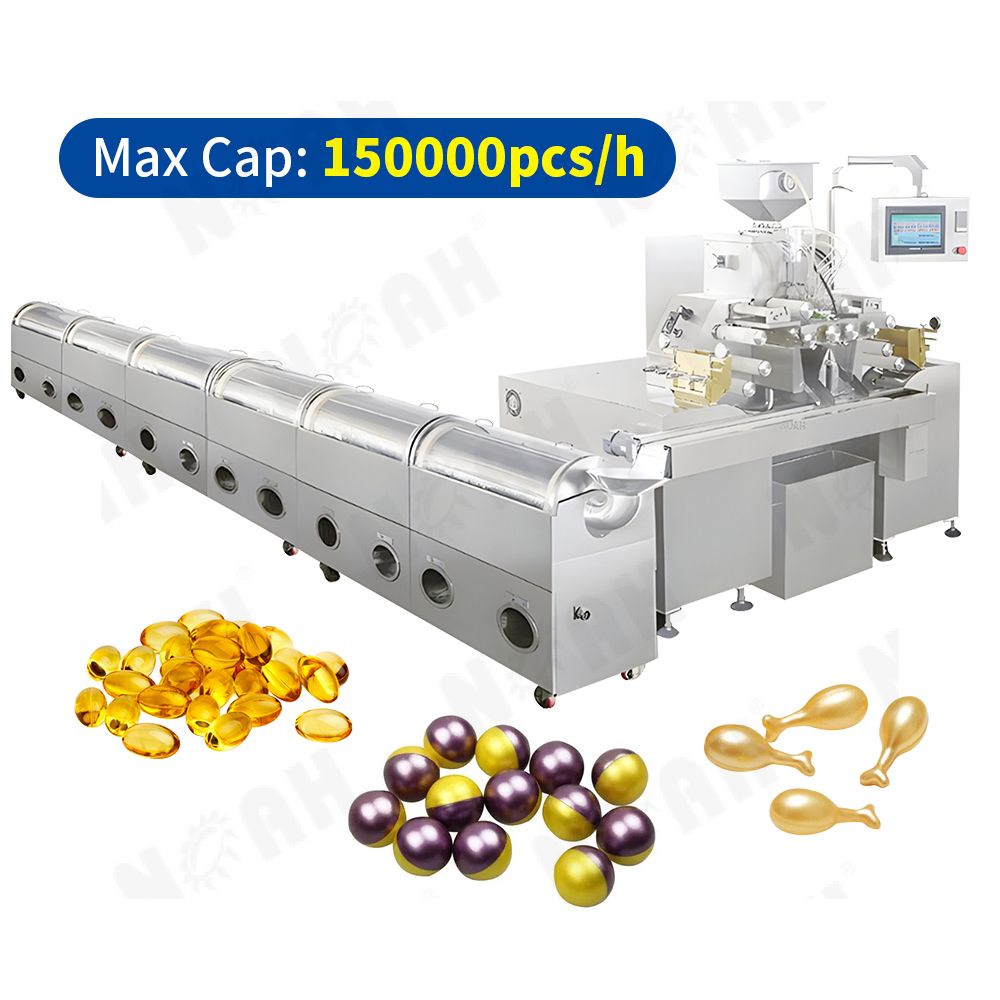
Size 1 Capsule Machine


Size 1 is the capsule size most plants standardise on because it covers the majority of solid-dose doses (roughly 200–400 mg of typical powder) while running at the highest practical line speed — smaller bodies fill slower per unit mass, larger ones need more shell and are harder to handle at rate. The size-1 machine is the throughput sweet spot, not a compromise.
Body volume | 0.50 mL | Size 0 = 0.68 mL; Size 2 = 0.37 mL |
Typical fill | 200–400 mg | powder-density dependent |
Max line speed | 3,600–4,200 caps/min | highest of common sizes |
Swallow comfort | Good | smaller than 0, easier for patients |
Filling speed is limited by capsule orientation and closing, not by dose. Size 1's moderate body sits in the fastest-handling window: a 4,000-cap/min size-1 line outperforms the same frame on size 00 (mechanically slower to seat the larger shell) and on size 4 (more units needed per kg of product, so more cycles per kg).
Indonesian generic plant, automatic dosator filler:
Size 1, 350 mg blend at 0.72 g/mL: 3,900 caps/min, weight RSD 2.0%.
Same frame on size 00: 3,100 caps/min (larger shell handling limit).
Same frame on size 4: 3,500 caps/min but 2.3× the cycles per kg of product.
EU: Annex 15 fill-weight control applies; size 1 high-speed runs need tighter in-process checking frequency.
Southeast Asia: size 1 is the common generic dose size; BPOM/Thai FDA familiar with it.
Middle East: SFDA accepts size 1 with documented shell origin (gelatin or HPMC).
Over-specifying to size 0 "just in case" wastes shell cost and slows the line.
Very low-dose products in size 1 need precise dosing — may suit size 3/4 better.
High-fill size 1 (near 400 mg dense) approaches size 0 territory; verify swallow comfort.
Choosing size 0 by habit when size 1 holds the dose and runs faster/cheaper.
Ignoring that speed is shell-handling-limited, not dose-limited.
Failing to requalify tamp depth when switching size 1 blends of different density.
0.50 mL body; roughly 200–400 mg depending on bulk density. Light powders fill less.
Yes at the line level — size 1 handles faster and needs fewer cycles per kg of product for typical doses.
Size 1 comfortably; size 2 only if the powder is very dense. Size 1 is the usual choice.
Yes with the right dosing module (pellet feeder or liquid pump); qualify the module separately.
Written by David Shi | Chief Industrial Application Engineer
David Shi is a Chief Industrial Application Engineer with 9 years of specialized experience in industrial drying system design, equipment selection, and production process optimization. He focuses on delivering tailored solutions for pharmaceutical, food, and chemical manufacturing, with proven expertise in GMP compliance, ISO 9001 standards, and large-scale production line integration.
Contact Us
Related Information!
Capsule Filler South AfricaPharmaceutical Manufacturing MachinesTablet Maker MachinePill Filler MachineAutomatic Tablet Making MachinePill Machine MakerLiquid Capsule Filling MachinePharmaceutical EquipmentsBlister Packing MachineGel Capsule Filling MachineCapsule MakerRotary Tablet MachineTablet Press Machine South AfricaCapsule Pill MakerPharmaceutical Industry MachinesTablet Blister MachineCapsule Filler Size 3Tablet Machine PriceFluid Bed DryerAutomatic Blister Packing MachineEncapsulator MachineCapsule Pill MachinePill Capsule MachineCapsule Filling MachineCapsules Filling MachineCapsulating MachineAlu Alu Packing MachineMachine TabletTablets Making MachineSize 1 Capsule FillerBlister Packing Machine PriceCapsule Filling Machine for SaleCapsule Making Machine PriceAutomatic Capsule FillerLiquid Capsule FillerPharmaceutical Blister PackagingWet GranulatorCapsule Machine AustraliaTablet Compression Machine NameCapsule Filling Machine PriceTablet Pressing MachineMedicine Packing MachineTableting PressCapsule Filling Machine South AfricaTablet Punching Machine