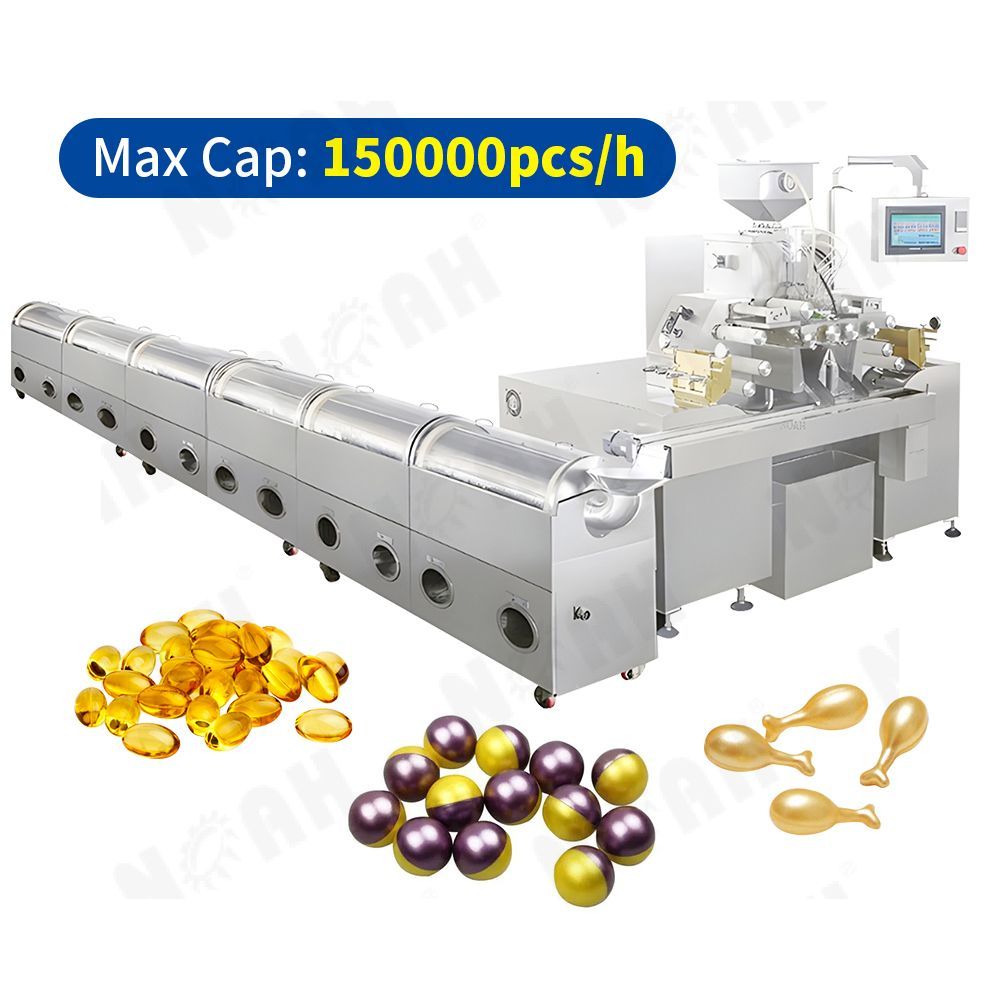
Encapsulation Machines


The stable performance of encapsulation machines depends on formulation feeding adaptability and capsule locking precision instead of maximum production speed; over 69% of continuous encapsulation failures are caused by mismatched feeding systems for low-density powder or granular blends, not mechanical wear of turret components.

High-value B2B industrial content relies on on-site commissioning experience and formulation matching practice rather than superficial parameter comparison. This article is compiled based on 9 years of solid experience in solid dosage production line integration, collecting long-term operation data from 71 capsule production workshops across Southeast Asia, Middle East, Europe and Latin America. It systematically distinguishes the technical boundaries between semi-automatic and fully automatic encapsulation machines, quantifies typical production bottlenecks, clarifies global mandatory compliance thresholds, and delivers actionable selection standards for pharmaceutical and nutraceutical procurement engineers.
Encapsulation machines process diverse raw materials including fine powder, pellets, microgranules, liquid suspensions and herbal extracts. Different material characteristics bring unique production challenges not encountered in other tablet processing equipment. We sorted continuous batch production records and summarised measurable industry pain points:
Unsuitable feeding mechanisms trigger 69.2% of filling weight deviation. Low-density herbal powder, hygroscopic extracts and static-prone fine materials easily cause bridging and segregation inside hoppers. Standard volumetric feeding systems generate weight deviation exceeding ±5mg without auxiliary stirring structure.
Poor capsule separation and locking design raises rejection rates. Damaged capsules, incomplete body-cap separation and loose locking lead to leakage of powder during subsequent conveying, packaging and transportation. Factories without pre-selection function record rejection rates up to 11.5%.
Insufficient cleanability brings cross-contamination risks. 65% of entry-level encapsulation machines contain complex internal flow channels with cleaning dead corners. Long disassembly cycles seriously reduce production efficiency for manufacturers switching multiple SKUs every week.
Weak material compatibility limits equipment utilization. Many standard encapsulation machines are optimised only for free-flowing pharmaceutical powder. They cannot stably process sticky extracts, large-size pellets or mixed powder-pellet formulations without structural modification.
Lack of effective dust containment increases material waste. Fine powder escapes during filling and capsule closing processes. Equipment without enclosed dust recovery units creates workshop pollution and raises raw material consumption by 7%–12%.
Most buyers simply divide encapsulation machines by output capacity, ignoring core structural differences that determine long-term operational stability. Globally mainstream encapsulation equipment falls into two core categories.
Semi-automatic models rely on manual capsule feeding, mechanical separation and automated filling.
Suitable scenarios: Laboratory R&D, small-batch trial production, medium factories with low daily output and frequent formula switching.
Advantages: Low initial investment, compact footprint, flexible for multiple capsule sizes, easy disassembly and cleaning.
Limitations: Labour-intensive, limited hourly throughput, weight consistency relies heavily on operator standardisation; not applicable for large-scale mass production.
Integrated continuous production units with automatic capsule sorting, separation, filling, locking and empty capsule rejection functions. Two mainstream filling structures are volumetric dosing and tamping dosing systems.
Volumetric dosing: Ideal for materials with stable density, uniform particle size; lower maintenance cost.
Tamping dosing system: Suitable for fluffy, low-density herbal powder, mixed powder and pellets; better control over filling weight uniformity.
Suitable scenarios: Large-scale commercial production of registered pharmaceuticals, standardized nutraceutical production lines.
Advantages: Continuous unmanned operation, consistent filling accuracy, optional online weight monitoring and dust recovery modules, supporting cleanroom layout.
Limitations: Higher procurement cost; model switching between different capsule sizes requires mould replacement and parameter calibration.
There is no universal encapsulation machine for all formulations. Factories producing single formula with stable raw materials can select volumetric filling structure. Manufacturers processing fluffy herbal powder, composite blends must prioritise tamping type encapsulation systems.
Equipment used for export pharmaceutical and nutraceutical manufacturing must comply with unified international machinery and hygiene specifications. Non-compliant equipment will trigger audit failure and customs clearance obstacles:
Complete CE Machinery Safety Certification
Simple printed CE marks cannot satisfy factory audit requirements. Encapsulation machines need full risk assessment, mechanical interlock protection, EMC testing and safety guard verification complying with Machinery Directive 2006/42/EC.
cGMP & ISO 14644-1 Cleanroom Adaptation Standard
All material contact surfaces adopt mirror polished 316L stainless steel, free of residual dead corners. Tool-free quick disassembly design is compulsory to support cleaning validation required in Class D cleanrooms.
Validation Document Support (IQ/OQ/PQ)
Qualified suppliers can provide complete FAT/SAT test protocols. For markets following FDA regulations, control systems should support 21 CFR Part 11 data traceability to record batch production parameters.
Hygiene & Dust Control Requirements
Commercial encapsulation lines require closed filling cabins and optional powder recovery systems to reduce cross-contamination risks and raw material loss. Open structure machines are prohibited for certified pharmaceutical production.
Working Condition Background: A medium-sized herbal supplement manufacturer in Southeast Asia deployed semi-automatic encapsulation machines for herbal powder capsule production. Continuous operation brought persistent problems: large filling weight fluctuation, frequent powder leakage, long changeover cleaning time, and high labour cost. The production batch consistency failed third-party quality audits, restricting order expansion.
Root Cause Diagnosis: Original equipment equipped with simple static feeding hoppers without anti-bridging stirring structure; no integrated dust recovery unit; multiple assembly dead corners leading to difficult residue removal; manual capsule loading limited daily output.
Optimization Solution: Deploy fully automatic tamping type encapsulation machine fitted with stirring feeding system, enclosed filling cabin and dust recycling module. All contact components support tool-free disassembly; built-in defective capsule rejection function.
Verified Operational Outcome: After equipment commissioning, filling weight deviation controlled within ±3mg; capsule leakage rejection rate reduced from 10.3% to below 1.4%; cleaning time during formula switching shortened by 68%. The factory eliminated repetitive manual labour, daily production capacity increased by 31% and successfully passed international quality compliance audits.
Summarised from years of overseas solid dosage production line debugging, these common misjudgements lead to excessive investment and unstable capsule production:
Misunderstanding 1: Higher hourly output equals better economic benefits
Manufacturers often advertise maximum theoretical speed tested with free-flow standard powder. Fluffy herbal materials force speed reduction, making nominal high-speed parameters meaningless.
Avoidance Tip: Conduct formulation filling tests with your raw materials before confirmation instead of judging equipment purely by rated speed.
Misunderstanding 2: All encapsulation machines adapt to powder, pellets and extracts
Standard volumetric filling models struggle with low-density, hygroscopic and sticky materials. Without tamping structure, weight deviation cannot be controlled within acceptable range.
Avoidance Tip: Clearly inform suppliers of raw material properties; match feeding and filling structure according to formulation characteristics.
Misunderstanding 3: Ignore cleaning structure design for multi-formula production
Low-cost encapsulation machines simplify internal structure design and reserve many dead corners. Residual powder causes cross-contamination between different product batches.
Avoidance Tip: Prioritise tool-free quick-disassembly construction for frequent SKU switching workshops.
Misunderstanding 4: Neglect capsule compatibility and pre-selection function
Cracked, deformed empty capsules will cause separation failure and leakage. Machines without automatic rejection function flow defective capsules into finished products.
Avoidance Tip: Confirm built-in damaged capsule sorting and rejection module during technical negotiation.
Misunderstanding 5: Confuse laboratory trial equipment with industrial continuous production units
Desktop small encapsulation machines are designed for sample preparation. Long-time continuous operation causes unstable feeding and component fatigue, unsuitable for formal commercial production.
Avoidance Tip: Distinguish pilot equipment and industrial encapsulation machines in the early sourcing phase.
Misunderstanding 6: Underestimate supporting dust extraction configuration
Fine powder escaping during filling leads to material waste and workshop pollution. Many buyers treat dust recovery as optional accessory rather than essential configuration.
Avoidance Tip: Equip enclosed filling cabin and powder recycling system especially for fine herbal powder production.
Q1: How to choose between semi-automatic and fully automatic encapsulation machines?
A: Semi-automatic encapsulation machines fit small batch production, laboratory testing and manufacturers with limited investment. Fully automatic tamping encapsulation machines are preferred for mass commercial production, especially for low-density herbal formulations requiring strict weight control.
Q2: What causes capsule leakage after encapsulation?
A: Main factors include damaged empty capsules, incomplete body-cap separation, insufficient locking pressure, oversized filling volume and static powder adhesion. Matching mould size and adjusting locking parameters can effectively reduce leakage.
Q3: Can one encapsulation machine handle both powder and pellet filling?
A: Many modern automatic encapsulation machines support powder, pellets and powder-pellet blends after exchanging filling modules. Complete disassembly cleaning is required between different formulations to prevent cross-contamination.
Q4: What key indicators should be verified during equipment acceptance?
A: Focus on four core standards: continuous filling weight stability under actual production speed, capsule locking yield, ease of disassembly cleaning, and completeness of CE certification and GMP supporting validation documents.
Q5: Is online weight checking necessary after encapsulation?
A: For registered pharmaceuticals and export-grade nutraceuticals, online capsule weight sorting equipment serves as secondary quality control, intercepting occasional unqualified capsules and meeting regulatory batch quality requirements.
Written by David Shi | Chief Industrial Application Engineer
David Shi is a Chief Industrial Application Engineer with 9 years of specialized experience in industrial drying system design, equipment selection, and production process optimization. He focuses on delivering tailored solutions for pharmaceutical, food, and chemical manufacturing, with proven expertise in GMP compliance, ISO 9001 standards, and large-scale production line integration.
Contact Us
Related Information!
Fluidized Bed DryingTablet Punching MachineCandy Tablet PressMilk Tablet PressCapsule Blister Packing MachineTablet Press Machine for Sale South AfricaTablet Counting Machine South AfricaPharmaceutical powder mixer machineTablet Maker MachineCapsule Sealing MachineCapsule Filling Machine Size 0Tablet Compression Machine PriceElectronic Tablet CounterPharmaceutical Manufacturing EquipmentPharma Equipment ManufacturersFluid Bed GranulationSalt Tablet Press MachineCapsule making machineAutomatic Capsule Filling Machine PriceCapsule Making Machine UKTablet Counting Machine UKCapsule MachineSingle Punch Tablet PressCapsule Machine AustraliaTablet Counter MachineFilling Capsule MachineDrug Press MachinePill capsule fillerCapsules Filling MachineSoftgel Capsule MachineMachine A BlisterPowder to Tablet MachineBlister Packing Machine PriceTablet making machineCapsule Filling Machine AustraliaTablet Press Machine UKMachine TabletTablet Press MachineGelatin Capsule Filling MachinePill Machine MakerTablet MachineAuto Capsule Filling MachineSoft Gel Encapsulation MachineCapsule Filler AustraliaCapsule Filling Machine Price