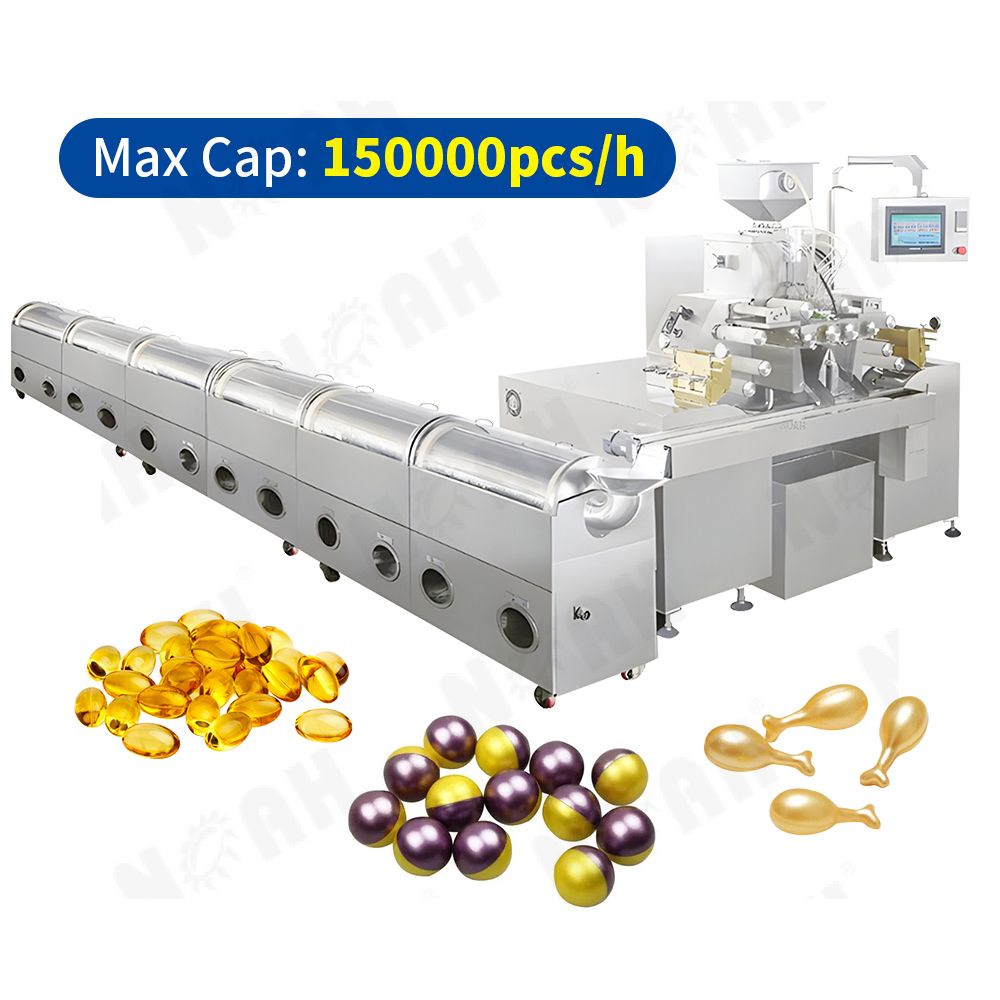
Capsule Pill Filling Machine


A capsule pill filling machine for anything other than powder needs a different dosing head — pellets, beads, microtablets and liquids cannot be "tamped," and the plants that try to force a powder filler onto multiparticulates end up with 8% content-uniformity failures.
Most capsule fillers are powder machines. But a large share of modern oral-dose products — especially modified-release and pediatric — are multiparticulate: mini-pellets, beads, or even tiny tablets inside a capsule. This article covers the machines built for that, not for powder.
| Fill form | Dosing principle | Accuracy driver | Typical RSD |
|---|---|---|---|
| Pellets / beads | vibratory / vacuum cup | count + weight check | 2–4% |
| Microtablets | counting disk / cup | count uniformity | 1–3% |
| Sustained-release granules | volumetric cup | granule size distribution | 2–5% |
| Liquid / paste | positive-displacement pump | pump calibration | 1–2% |
A tamping disk meters by volume of compressible powder. Pellets don't compress — they bridge and rat-hole, giving 8–12% RSD. We retrofitted a vacuum-cup head onto a filler for a 2 mm pellet product and dropped RSD from 9% to 2.6% without touching the formulation.
EU, modified-release capsule: A German plant filled 1.5 mm sustained-release beads into size 1 capsules via a vacuum-cup head with an in-line check-weigh; RSD held 2.4% across a 12-month campaign, meeting the tight release-specification window.
Southeast Asia, pediatric mini-tablets: A Philippine line counted 3 mg microtablets (5 per capsule) using a counting-cup head; count uniformity was within ±0, critical for the low total dose.
EU GMP: multiparticulate content uniformity is scrutinised; in-line check-weigh is expected.
FDA 21 CFR 211: blend/content uniformity for modified-release is a high-risk control.
CE 2006/42/EC: rotating cup/interlock guarding.
ISO 9001 / ISO 13485: 13485 for device-grade combinations.
Powder fillers forced onto pellets → bridging, 8%+ RSD.
Count-based dosing without weight check misses a broken microtablet.
Liquid-in-capsule leaks if the pump seal isn't rated for the solvent.
Assuming a standard powder filler handles pellets — it needs a cup/vacuum head.
Counting microtablets without an in-line weight verification.
Using a powder-configured machine for liquid fill — wrong pump entirely.
Powder fillers (tamping/dosator) vs dedicated multiparticulate fillers (vibratory cup, vacuum cup, counting disk) vs liquid-in-capsule (pump). Some platforms accept swappable heads; confirm the head family matches your forms before buying the base.
State every fill form (pellet size, microtablet count, liquid viscosity) in the RFQ.
Require RSD on your actual multiparticulate, not a powder certificate.
Specify in-line check-weigh or count-verify for low-dose products.
For liquids, confirm pump-seal compatibility with your solvent.
Contact Us
Related Information!
Rotary Tablet MachinePill Machine MakerFilling Capsule MachineHydraulic Tablet PressCapsule Filler Size 1Capsule Filling Machine UKPowder to Tablet Making MachinePharma Industry EquipmentPharmaceutical Industry MachinesRapid Pack Blister Packing MachineRotary Tablet Press Machine00 Capsule MakerPill Capsule MachineSoft Gel Capsule MachineDrug Press MachineSingle Tablet PressLarge Tablet PressCapsule Filling Machine AustraliaTablets MachineTablet Strip Packing MachineSemi Automatic Capsule FillerCapsule machinesThe Capsule Machine Size 0Gel Cap Filling MachineDishwasher Tablet Making MachineDouble Rotary Tablet Press MachineTablet Machine ManufacturersEncapsulator MachineTablet CompressorAutomatic Blister Packing MachineCapsule FillersCapsule Pill MakerGelatin Capsule Filling MachineCapsule Maker AustraliaCapsule Making Machine PricePowder Tablet Press MachineTablet Machine PriceBlistering Machine in Pharmaceutical IndustryTablet Compression MachineTablet Press Machine UKCapsule Filling Machine PriceCapsule Filling Machine Size 000Liquid Capsule MachineCapsule Filler South AfricaCompression Tablet Machine